
Cybercrime in Namibia is no longer a distant or theoretical risk. As businesses across Namibia continue to digitise operations , from cloud systems to online banking , cyber threats are increasing in both volume and complexity. Recent reporting shows a sharp rise in detected threats, financial fraud, and system vulnerabilities affecting organisations of all sizes. For business leaders, understanding these trends is the first step toward building resilience.
Cybercrime in Namibia Is Increasing in Volume
Threat activity across Namibia has grown significantly in recent years. In 2025 alone, hundreds of thousands of threats were detected within just the first quarter, with over a million vulnerabilities identified across networks during the first half of the year. (Observer24), (The Villager).
What this means for businesses:
- Attacks are no longer limited to large enterprises
- Automated scanning tools constantly probe internet-facing systems
- Even small organisations are likely to be targeted
Today’s attackers often rely on automation rather than manual targeting. If a system is exposed or unpatched, it can be identified and exploited quickly — sometimes within hours.
Ransomware and Impersonation Attacks Are Becoming More Sophisticated
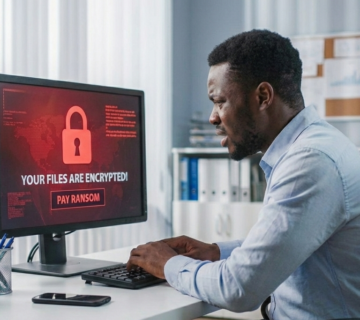
Cybercrime in Namibia is evolving beyond simple scams. Reports highlight increased activity involving ransomware, impersonation fraud, and automated botnet attacks.
Cybercrime in Namibia Now Includes Advanced Social Engineering
Modern attackers combine technology with psychological manipulation. Businesses are seeing:
- Ransomware targeting service providers
- Executive impersonation emails requesting urgent payments
- AI-enhanced fraudulent communications
- Botnet-driven attacks against exposed services (The Villager)
These attacks are carefully crafted to appear legitimate, making employee awareness just as important as technical controls.
System Vulnerabilities and Misconfigurations Remain a Major Risk
A significant portion of successful cyber incidents stem from preventable weaknesses, including:
- Unpatched or unsupported software
- Default passwords
- Open management interfaces
- Poor visibility of internet-facing systems (The Brief)
Many attacks in Namibia are opportunistic. Criminals scan for outdated services such as exposed DNS, FTP, or remote access systems and exploit them automatically.
Financial Fraud and Business Email Compromise Are Increasing
Cybercrime in Namibia has a measurable financial impact. Fraud losses linked to phishing, EFT fraud, and unauthorised transactions have risen sharply.(hei.com.na, pg4)
In 2025, reported fraud losses exceeded N$65 million, with digital channels playing a major role.(Trendsnafrica.com)
Common fraud patterns include:
- Fake supplier banking detail changes
- Invoice manipulation
- Credential theft leading to unauthorised payments
- Card-not-present fraud
Because many businesses rely heavily on email and digital payments, identity-based attacks are often the easiest entry point for criminals.
Implementing multi-factor authentication and payment verification processes can significantly reduce risk.
Small and Medium Businesses in Namibia Are Frequent Targets
SMEs in Namibia ,especially in urban centers, like Windhoek are particularly exposed.
Why?
- Limited dedicated cybersecurity resources
- Fewer protective controls
- High dependence on email and online banking
- Less formalised incident response processes
Cybercriminals understand that smaller businesses may not have layered defences in place. Unfortunately, this makes them attractive targets.
Cybersecurity is no longer just an enterprise concern, it’s a business survival issue across Namibia.(The Brief)
National Cybersecurity Efforts Are Still Developing
The Namibian Government has introduced a National Cybersecurity Strategy and awareness initiatives aimed at improving resilience.
However, regulatory frameworks and enforcement mechanisms are still maturing.
This means:
- Businesses cannot rely solely on regulation for protection
- Preventative security measures are more effective than legal recourse
- Incident readiness is essential
Ultimately, responsibility for protection rests largely with each organisation. (Africa-Press).
Email and Identity-Based Attacks Remain the Most Common Entry Point
Many cyber incidents do not start with technical hacking but with email-based deception.
Phishing, impersonation, and fraudulent communications remain common attack vectors in Namibia.
Typical tactics include:
- Fake bank notifications
- Supplier impersonation emails
- Executive payment requests
- Credential harvesting pages
Because these attacks target people rather than systems, ongoing employee awareness training and email security controls are critical.
What This Means for Businesses in Namibia
Cybercrime in Namibia is increasing in scale, sophistication, and financial impact. The threat landscape is no longer limited to isolated scams — it includes automated exploitation, ransomware, impersonation, and large-scale fraud.
For businesses, the key takeaways are clear:
- Assume your systems are being scanned
- Prioritise patching and configuration management
- Strengthen email and identity protection
- Train employees regularly
- Prepare for incidents before they happen
Cybersecurity is not about fear, it’s about preparation, visibility, and resilience.
Get Cybersecurity Market Advice
Informing the public about cybersecurity is very important to us. Please get in touch with us for market advice today.



No comment